Energy prices are turning home efficiency into a resilience decision
Higher utility costs are changing how households think about renovations, heating systems and property risk. For a buyer, energy efficiency is not only a comfort feature—it can also affect the stability of future housing costs.
The signal from Europe: expensive energy changes household plans
Recent findings from the ECB’s Consumer Expectations Survey show a clear relationship between utility costs and renovation intentions. When households reported faster growth in their utility costs, energy-efficiency renovations became more common among their plans. In February 2026, energy-efficiency work was among the most frequently mentioned types of renovation planned by respondents.
The relationship is measurable in the survey data: a €100 increase in monthly utility costs was associated with a 0. 8 percentage point higher probability of planning an energy-efficiency renovation. This is an association in survey analysis, not a guarantee that every household will respond in the same way.
Why the heating system matters
The condition of a home is only one part of its exposure to energy-price shocks. The heating system also matters. Households using oil or gas heating were more likely to report plans for efficiency renovations when their utility costs were high.
By contrast, the probability was lower among households using renewable heating systems such as heat pumps or solar collectors, which were less affected by the price spikes described in the ECB analysis. The broader change is visible in the energy mix. Between 2023 and 2026, the share of fossil fuels used for space heating in the euro area fell by 3.
5 percentage points, reaching 56%. That does not mean every individual home became more efficient, but it does show that heating choices are moving at sector level.
Renovation is becoming a form of cost-risk management
For a property owner, insulation, windows, heating equipment or solar generation can be viewed in two ways. They are physical improvements, but they can also reduce sensitivity to future changes in utility costs. The ECB describes this as increased resilience: energy-related investment can cushion the effect of energy-price shocks on the building sector and make buildings less exposed to those shocks.
The source also reports that households living in energy-renovated homes experienced lower growth in utility costs during the subsequent heating season than households in unrenovated homes. This is evidence of a reported difference between groups, not a promise of a fixed saving for a particular property. Actual results depend on the building, weather, energy use, equipment and prices.
The buyer’s mistake: focusing only on the purchase price
- A lower asking price does not automatically make a property cheaper to own. An older home with fossil-fuel heating or weak energy performance may require more capital after completion. Those costs can arrive alongside a mortgage, furnishing expenses, maintenance and other ownership commitments. A more useful comparison is the property’s total financial exposure:
- purchase price and transaction costs;
- expected renovation needs;
- heating and utility-cost sensitivity;
- available cash after the purchase;
- monthly mortgage and housing costs; and
- the amount of uncertainty the household can absorb. This is not a calculation of a guaranteed return on renovation. It is a way to avoid treating energy performance as a secondary detail when assessing a long-term housing decision.
What the European data says about the renovation market
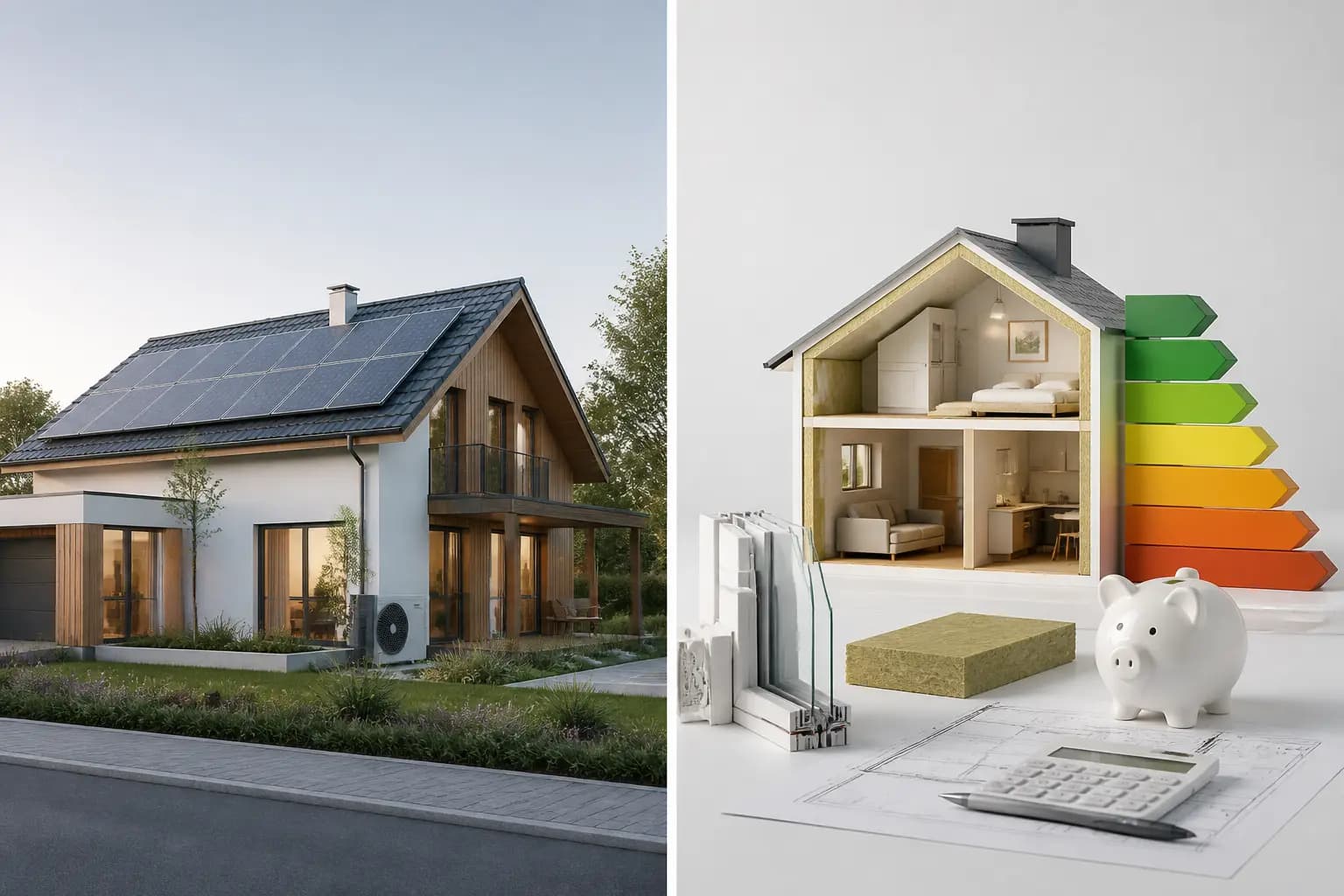
The shift is not limited to individual households. The ECB reports that works on existing buildings represented 75% of construction activity, while renovation activity accounted for more than 60% of total housebuilding activity in the euro area according to the industry surveys cited in the post. Electrical, plumbing, heating and air-conditioning installations alone represented 40% of value added in the five largest euro-area countries in 2023.
The data also points to stronger demand for selected technologies. Photovoltaic imports from China nearly doubled after the energy-price increase and remained high. The average imported price of a tonne of PV modules or panels fell from nearly €5,000 in 2023 to €1,700 in 2026, according to the ECB post.
These figures describe market developments; they do not establish the final installed cost for a household.
A practical framework before signing for a home
Before comparing two properties, separate three questions: 1. How exposed is the home? Check the heating fuel, the building envelope and the likely causes of high utility use.
A low current bill may reflect temporary underheating rather than an efficient building. **2. What investment might be needed?
Distinguish urgent repairs from optional efficiency improvements. Keep the renovation budget separate from the deposit and from the cash reserve needed after completion. 3.
Can the household carry the uncertainty? ** Model the mortgage together with realistic housing costs rather than looking at the loan payment alone. If the property requires major work, timing and budget overruns can matter as much as the headline renovation estimate.
The ECB evidence supports treating energy efficiency as part of resilience analysis. It does not identify which renovation is financially best for an individual buyer. That requires property-specific technical and financial assessment.
The lasting lesson for a mortgage decision
Energy efficiency should not be reduced to a label or a promise of lower bills. Its financial importance lies in how the home behaves when energy prices, household income or maintenance needs change. For a long-term buyer, the strongest question is therefore not simply “Which home is cheaper today?
” It is “Which home leaves enough room in the budget if ownership costs rise? ” That framing connects the property’s physical condition with mortgage affordability, cashflow and financial resilience. Orientation only: examples and calculations are illustrative and do not replace financial, investment or mortgage advice.
Key takeaways and FAQs
Does an energy-efficient home always have lower utility costs?
Not necessarily. The ECB source reports lower growth in utility costs for households living in energy-renovated homes, but the outcome for an individual property also depends on usage, weather, equipment and energy prices.
Are renewable heating systems protected from energy-price changes?
No system eliminates all cost risk. The ECB survey found that households using renewable heating systems were less affected by the recent price spikes described in the analysis.
Should a buyer automatically pay more for an efficient property?
Not automatically. The value depends on the property, required investment, financing and the buyer’s ability to absorb future costs. Efficiency should be assessed alongside the total ownership budget.
What to take away
Energy prices have made the running cost of a home harder to treat as a fixed background item. ECB survey evidence links higher utility-cost growth with stronger renovation intentions and shows lower subsequent utility-cost growth among households in energy-renovated homes. For buyers, the practical implication is to assess energy performance, heating technology and renovation needs together with the mortgage—not after the purchase decision has already been made.
This article is informational and does not replace financial, investment or mortgage advice.